
Cortisol Testing on TRT: Why Your Morning Number Explains the Energy Paradox
Published on:
Updated on:
People are asking...
34, been consistent in the gym for 14 years with a good diet. Had very low energy, low libido and poor recovery after my workouts. Currently on 180 M...
It's very likely that 180mg from that starting T level may be more than you need, especially if you're feeling so good. Dropping down to 160mg (or 170mg first for 3-4 weeks) and seeing how you feel w... See Full Answer
650 TT and 85 free T. I have brain fog, fatigued all of the time, low energy, etc. All of this gets worse as the day goes on. The doctor I visited thi...
It's a good sign that doctor is onboard already. With good TRT, the symptoms really do matter more so there's no need to let the numbers hold you back. One thing to remember if you're feeling hesitant... See Full Answer
Two questions. First, I find my testosterone significantly tanks when I've been extra busy, especially physically. When I first tanked (270 total or ...
For your first question, this can impact your Testosterone levels if you're not resting properly. I'll barrow from one of our earlier replies: "The majority of your Testosterone is produced and releas... See Full Answer
Have a question? Ask us.
At AlphaMD, we're here to help. Feel free to ask us any question you would like about TRT, medical weightloss, ED, or other topics related to men's health. Or take a moment to browse through our past questions.
Your testosterone is optimized, your libido is back, you're hitting personal records in the gym, and your labs look great on paper. So why do you still feel like you're running on fumes by two in the afternoon?
This is one of the most common and frustrating experiences men report after starting testosterone replacement therapy. Everything points in the right direction, yet the energy, mental clarity, and emotional resilience they were promised never fully arrive. The missing variable, in many cases, lives in a single morning lab result that most TRT protocols never order.
The Energy Paradox That Leaves Men Frustrated
Testosterone does a lot of heavy lifting in the male body. It supports muscle protein synthesis, libido, bone density, red blood cell production, and mood regulation. When levels are genuinely low, restoring them can produce real, measurable improvements across all of those areas. Many men feel a meaningful difference within weeks.
But testosterone is not the only hormone governing how energized, calm, and resilient you feel from hour to hour. Energy, in a functional sense, depends on an orchestra of systems working in rhythm: sleep architecture, blood sugar regulation, immune tone, adrenal output, and metabolic rate. When one section of that orchestra is out of tune, the whole performance suffers, regardless of what your testosterone level reads.
Cortisol is often that out-of-tune section. And its morning value, specifically, can tell you more about why you feel the way you do than almost any other single data point.
What Cortisol Actually Does (And Why It Is Not Just a Stress Hormone)
Most men hear "cortisol" and immediately think of stress, belly fat, and burnout. That association is not wrong, but it is incomplete. Cortisol is a glucocorticoid hormone produced by the adrenal glands, and under normal conditions, it performs essential, life-sustaining functions throughout the day.
In the morning, cortisol rises sharply to mobilize blood glucose, sharpen alertness, reduce overnight inflammation, and prepare the body for activity. This morning surge is what gets you out of bed feeling awake rather than groggy. It coordinates with your circadian rhythm, your light exposure, and your sleep quality to set the metabolic tone for the entire day.
As the day progresses, cortisol naturally declines. By evening, levels taper low enough to allow melatonin to rise, body temperature to drop slightly, and sleep to initiate properly. This arc, high in the morning and low at night, is the healthy cortisol curve. When it is working correctly, you feel naturally alert during the day and naturally tired at night. When it is disrupted, nearly every system that testosterone is supposed to improve gets blunted.
Cortisol also plays a central role in training recovery. It is catabolic during exercise, breaking down tissue and mobilizing energy, then it recedes to allow testosterone and growth hormone to drive repair. If cortisol stays elevated after training, that repair window narrows. Gains slow. Recovery feels incomplete. And despite doing everything right in the gym, you chronically feel beat up.
Why the Morning Number Carries So Much Weight
A single morning cortisol measurement, whether taken via blood or saliva, captures a physiologically critical window: the cortisol awakening response, or CAR. In the roughly thirty to sixty minutes following waking, a healthy adrenal system produces a pronounced cortisol spike that is distinct from the baseline overnight level. This spike is not incidental. It is a programmed anticipatory response tied to circadian signaling, and its magnitude reflects the resilience and calibration of the entire hypothalamic-pituitary-adrenal axis.
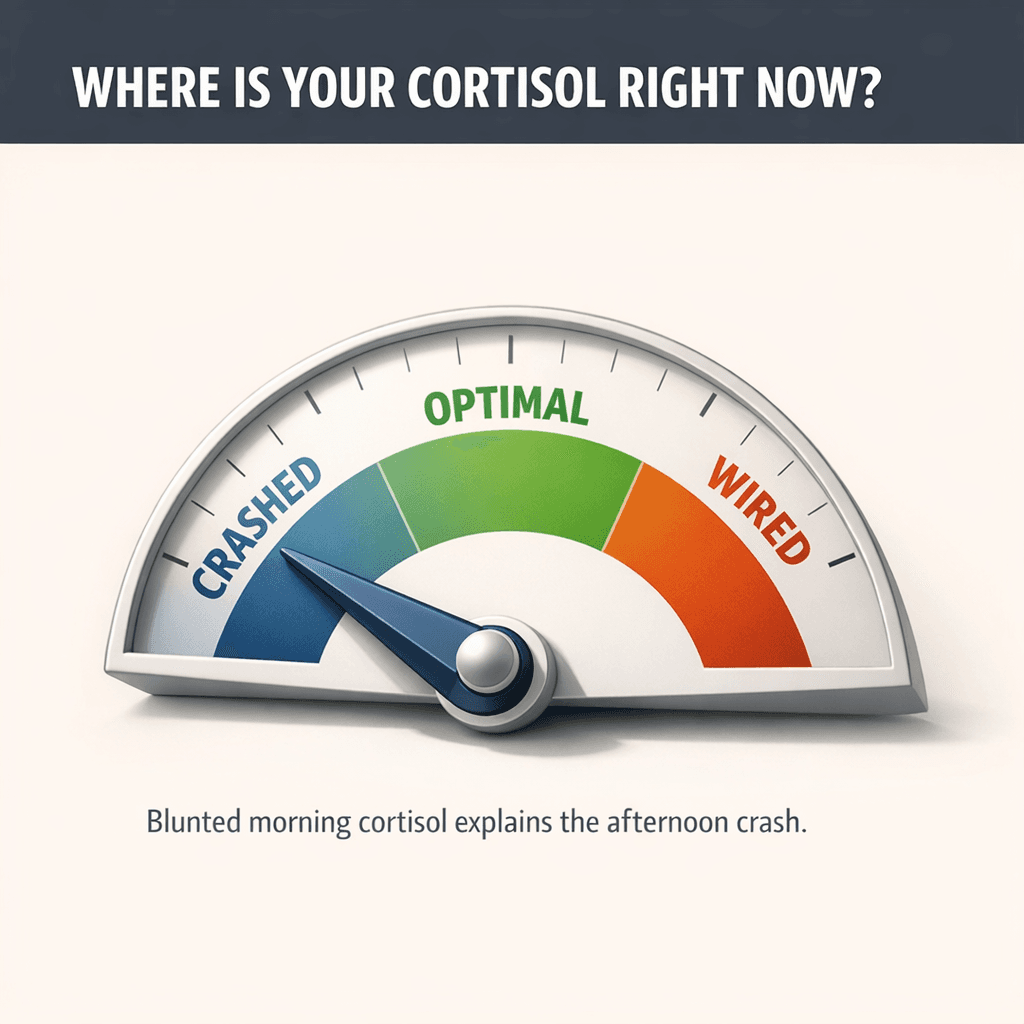
When this morning spike is within a healthy range and timed appropriately, it correlates with better alertness, stronger immune regulation, improved mood, and more stable energy throughout the day. When it is blunted, you may wake up feeling unrested, need caffeine immediately just to feel functional, and hit a wall before noon. When it is excessively elevated and out of proportion with how you feel, it can reflect chronic stress load, early sleep-disordered breathing effects, or an adrenal system that has been running too hard for too long.
Neither pattern is a diagnosis on its own. But either pattern, set against a backdrop of TRT-optimized testosterone and persistent fatigue, becomes a meaningful clinical signal.
Testing Basics: Not All Cortisol Tests Are the Same
Understanding how cortisol is tested matters because the method, the timing, and the context all affect what the result actually means.
Serum cortisol, drawn through a standard blood test, measures total cortisol in the blood and is the most commonly ordered form. It must be drawn in the morning, ideally within a specific window after waking, because the value changes substantially throughout the day. A cortisol draw done at noon or later tells a very different story than one done at peak morning output.
Salivary cortisol testing, often collected at four or more time points throughout the day, provides a more complete picture of the daily curve. Because saliva measures the free, biologically active fraction of cortisol rather than the protein-bound total, many clinicians consider it a closer reflection of what the tissues are actually experiencing. A four-point salivary test can show whether morning output is appropriate, whether the afternoon decline is happening as expected, and whether evening levels are suppressed enough to support good sleep.
Urinary cortisol testing, particularly the dried urine format done over a full day, captures total cortisol metabolite output and can provide insight into overall cortisol burden rather than just a single moment.
Results must always be interpreted in context. Acute illness, intense exercise in the preceding day, poor sleep the night before, significant emotional stress, alcohol the previous evening, and even the timing of morning caffeine can all shift a single cortisol reading. A man who woke at three in the morning, consumed two cups of coffee before his blood draw, and is fighting a head cold will produce a cortisol value that may look very different from his true resting baseline. This is why a single number is a starting point for conversation with a clinician, not a verdict.
The Symptoms That Cortisol Dysregulation Produces in Men on TRT
The overlap between low testosterone symptoms and cortisol dysregulation symptoms is significant, which is part of why the latter goes undetected so often.
The midafternoon energy crash, the one that hits around two or three and makes sustained focus nearly impossible, often reflects a cortisol curve that either dropped too steeply in the morning or never achieved a proper peak to begin with. The "tired but wired" feeling at night, where you are exhausted but cannot settle, sleep lightly, and wake at three or four in the morning with racing thoughts, frequently reflects cortisol that is not declining as it should by evening. This pattern can coexist with excellent testosterone levels and still make a man feel profoundly unwell.
Anxiety that seems disproportionate to life circumstances, low motivation despite improved testosterone, stubborn abdominal fat that does not respond to training or diet, and poor exercise tolerance despite being physically capable all map onto chronic cortisol dysregulation. Belly fat is particularly relevant here, as chronically elevated cortisol promotes visceral fat accumulation and can blunt the body composition improvements men expect from TRT.
The Root Causes Worth Identifying
Cortisol does not dysregulate without a reason. The most common drivers in men pursuing TRT include sleep apnea, chronic psychological stress, under-recovery between training sessions, overtraining, aggressive caloric restriction, systemic inflammation, alcohol use, poorly timed caffeine, and inconsistent sleep schedules that shift the circadian anchor point week to week.
Sleep apnea deserves specific mention because it is both underdiagnosed and powerfully disruptive to cortisol rhythm. Every apnea event is a brief physiological emergency that triggers an adrenal stress response. A man with moderate to severe apnea may be experiencing hundreds of these micro-stress events per night without knowing it, producing a cumulative cortisol burden that no testosterone protocol can fully overcome.
Practical Steps That Support a Healthier Cortisol Rhythm
None of the following is medical advice, and none of it replaces a conversation with your clinician. These are lifestyle approaches that research consistently associates with healthier cortisol patterning.
Morning light exposure, within the first thirty to sixty minutes of waking, is one of the most powerful circadian anchors available. Natural light through the eyes signals the suprachiasmatic nucleus to sharpen the morning cortisol peak and begin the day's hormonal cascade on time. Even on overcast days, outdoor light exposure vastly outperforms indoor lighting.
Sleep consistency, meaning waking and sleeping at the same time seven days a week, matters more than most men expect. Shifting your wake time significantly on weekends creates a form of social jet lag that destabilizes the cortisol curve and reduces sleep quality even when total hours look adequate.
Resistance training supports cortisol regulation through multiple mechanisms, but volume and recovery balance matter. More training is not always better, and extended periods of high-volume training without adequate recovery days can shift the cortisol baseline upward chronically.
Meal timing and protein distribution have meaningful effects on cortisol, particularly in men who train. Skipping breakfast or training fasted while under high stress load can exacerbate cortisol elevation. Ensuring adequate protein at morning and midday meals, along with sufficient dietary fiber, helps stabilize blood glucose and moderate the cortisol response to metabolic stress.
Breath work and mindfulness practices, even brief ones, consistently reduce acute cortisol elevation. Limiting caffeine to earlier in the day and avoiding alcohol in the evening hours are small behavioral changes that can produce measurable improvements in sleep architecture and, by extension, the cortisol awakening response the following morning.
And if symptoms suggest sleep-disordered breathing, pursuing a sleep study is not optional. It is foundational.
Why More Testosterone Is Not Always the Answer
This is the conversation that men on TRT sometimes need but do not always have. When fatigue persists despite optimized testosterone, the clinical instinct to raise the dose or add other compounds is understandable, but it may not be addressing the actual problem.
Experienced clinicians who manage men's health comprehensively will, when fatigue persists, look beyond the testosterone panel. Thyroid function can directly impair energy, mood, and metabolism even when TRT is dialed in. Iron status, including ferritin, matters for red blood cell efficiency and oxygen delivery. Metabolic health markers, including fasting glucose, insulin response, and lipid patterns, reflect systemic inflammatory tone. And cortisol, via morning serum or multi-point salivary testing, may reveal an adrenal rhythm that is working against everything the testosterone protocol is trying to accomplish.
Setting expectations appropriately matters too. TRT is not a cure for poor sleep hygiene, chronic psychological stress, or untreated sleep apnea. It is a powerful tool for correcting a genuine hormonal deficiency, and its effects are maximized when the broader physiological environment supports recovery and resilience.
When Symptoms Demand Professional Attention
Fatigue that is severe, persistent, or worsening over time despite a well-managed TRT protocol warrants a thorough clinical evaluation. Major mood changes, particularly anxiety that feels uncontrollable or depressive episodes that do not respond to lifestyle measures, should be discussed with a qualified provider promptly. Signs of sleep apnea, including loud snoring, gasping during sleep, morning headaches, or a partner who observes breathing interruptions, are not something to wait on. These are not problems that optimize away on their own, and they carry real long-term cardiovascular and metabolic risk.
Any new or escalating physical symptom that does not fit neatly into the expected TRT experience, whether extreme fatigue, unusual weight changes, mood instability, or cardiovascular symptoms during exercise, deserves professional evaluation rather than self-adjustment.
The Rhythm Underneath the Numbers
Testosterone is one chapter in a longer story about male health and energy. The chapter that often goes unread is the one about cortisol rhythm, recovery capacity, and the twenty-four-hour hormonal arc that either supports or undermines everything testosterone is doing.
Your morning cortisol value matters because it reflects not just a single hormone level but the calibration of a system: how well you are sleeping, how effectively your body is recovering, how much chronic stress load you are carrying, and whether your circadian biology is functioning as it should. When that system is dysregulated, the energy paradox on TRT is almost inevitable.
Practices like AlphaMD approach men's health with exactly this kind of comprehensive lens, looking at what testosterone alone cannot explain and asking the questions about sleep, stress, recovery, and rhythm that make the difference between a man who is technically optimized and one who genuinely feels it.
Have a question? Ask us.
At AlphaMD, we're here to help. Feel free to ask us any question you would like about TRT, medical weightloss, ED, or other topics related to men's health. Or take a moment to browse through our past questions.
People are asking...
34, been consistent in the gym for 14 years with a good diet. Had very low energy, low libido and poor recovery after my workouts. Currently on 180 M...
It's very likely that 180mg from that starting T level may be more than you need, especially if you're feeling so good. Dropping down to 160mg (or 170mg first for 3-4 weeks) and seeing how you feel w... See Full Answer
650 TT and 85 free T. I have brain fog, fatigued all of the time, low energy, etc. All of this gets worse as the day goes on. The doctor I visited thi...
It's a good sign that doctor is onboard already. With good TRT, the symptoms really do matter more so there's no need to let the numbers hold you back. One thing to remember if you're feeling hesitant... See Full Answer
Two questions. First, I find my testosterone significantly tanks when I've been extra busy, especially physically. When I first tanked (270 total or ...
For your first question, this can impact your Testosterone levels if you're not resting properly. I'll barrow from one of our earlier replies: "The majority of your Testosterone is produced and releas... See Full Answer
Get $30 off your first month’s order
Enter your email address now to receive $30 off your first month’s cost, other discounts, and additional information about TRT.
Legal Disclaimer
This website is a repository of publicly available information and is not intended to form a physician-patient relationship with any individual. The content of this website is for informational purposes only. The information presented on this website is not intended to take the place of your personal physician's advice and is not intended to diagnose, treat, cure, or prevent any disease. Discuss this information with your own physician or healthcare provider to determine what is right for you. All information is intended for your general knowledge only and is not a substitute for medical advice or treatment for specific medical conditions. The information contained herein is presented in summary form only and intended to provide broad consumer understanding and knowledge. The information should not be considered complete and should not be used in place of a visit, phone or telemedicine call, consultation or advice of your physician or other healthcare provider. Only a qualified physician in your state can determine if you qualify for and should undertake treatment.