
Blood Sugar Beats Testosterone for Erectile Function: Why Your A1C Matters More Than Your T Levels
Published on:
Updated on:
People are asking...
What are your thoughts on testosterone and its impact on blood glucose and possible prevention of t2 diabetes according to some studies over the last ...
Its now widely recognized that low testosterone is a risk for metabolic disorders, obesity, and heart disease. Study results have demonstrated that normalizing testosterone levels with TRT reduces H... See Full Answer
Do you require bloodwork? What test levels are you shooting for? My current clinic shoots for 1100....
Yes, providers do require bloodwork, most TRT companies will since Testosterone is a controlled substance & it's good to have this info on file even if someone is very symptomatic. However, the intere... See Full Answer
I was wondering if I could ask about my labs. Current 46 years old. Started feeling symptoms that could be associated with low t. I was also overweigh...
First, awesome job losing the weight and making lifestyle changes. You have a good selection of supplements. The labs on paper look good, you wouldn't be classified as primary or secondary hypogonadis... See Full Answer
Have a question? Ask us.
At AlphaMD, we're here to help. Feel free to ask us any question you would like about TRT, medical weightloss, ED, or other topics related to men's health. Or take a moment to browse through our past questions.
Most men chasing better erections are fixated on their testosterone numbers. But the blood sugar test quietly sitting in their annual lab results may be doing far more damage than a slightly low T level ever could.
The Erection Is a Vascular Event First
To understand why blood sugar matters so much, it helps to understand what actually has to go right for an erection to happen. An erection is not simply a hormonal event. It is, at its core, a cardiovascular and neurological one.
When arousal signals travel from the brain down through the spinal cord and into the pelvic nerves, the smooth muscle tissue inside the penis receives a cue to relax. That relaxation is triggered largely by nitric oxide, a molecule released from the inner lining of blood vessels called the endothelium. When nitric oxide is released, the arteries supplying the erectile tissue dilate, blood rushes in under pressure, and the tissue fills and becomes rigid.
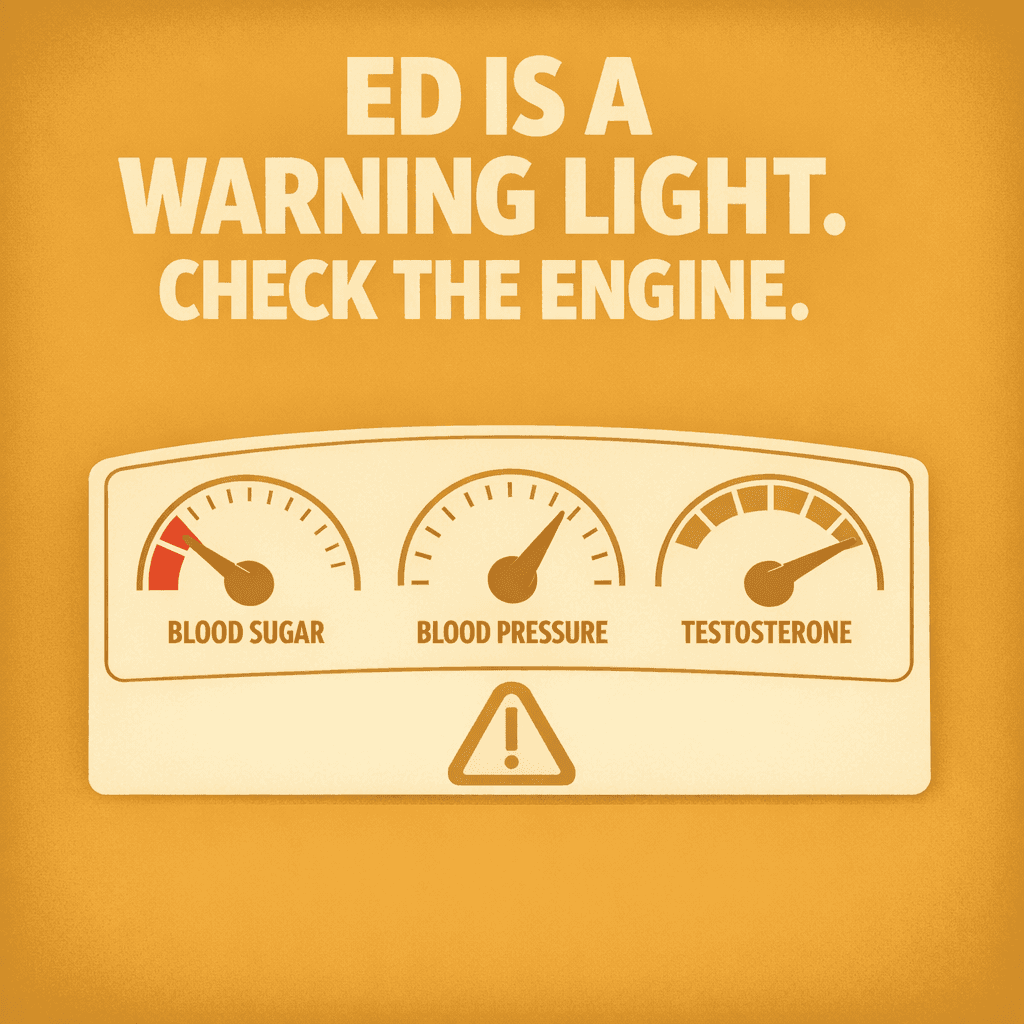
Testosterone plays a supporting role in this process. It helps maintain libido, mood, energy, and some aspects of vascular and nerve function. But it does not directly cause the blood to flow. The engine driving an erection is your vascular system. And nothing corrodes that engine faster than chronically elevated blood sugar.
What A1C Actually Tells You
The A1C test, sometimes called hemoglobin A1C or glycated hemoglobin, reflects your average blood sugar level over roughly the past two to three months. Unlike a single fasting glucose reading that captures one moment in time, A1C gives a longer-term picture of how much sugar has been circulating in your blood.
When blood sugar stays elevated over months and years, it begins to chemically attach to proteins throughout the body, including the proteins inside red blood cells and, critically, inside the walls of blood vessels. This process, called glycation, stiffens and damages tissue in ways that accumulate quietly and often without symptoms for years.
This is why A1C matters so much for erectile function. The damage it reflects is not happening in isolation. It is happening inside the very arteries, nerves, and endothelial cells that an erection depends on.
How Elevated Blood Sugar Quietly Dismantles Erectile Function
The mechanisms by which chronically high blood sugar impairs erections are multiple and reinforcing. Each one is worth understanding on its own terms.
Endothelial dysfunction. The endothelium is the thin cellular lining inside every blood vessel. It produces nitric oxide, regulates blood flow, and keeps vessels pliable. Elevated glucose directly injures endothelial cells, impairing their ability to produce nitric oxide. Less nitric oxide means less arterial dilation, which means reduced blood flow into erectile tissue. Even before a man develops full diabetes, endothelial dysfunction can already be measurable.
Arterial stiffness. Sugar attaches to structural proteins in vessel walls, making them less elastic. Stiff arteries cannot dilate as effectively on demand. For erections, which depend on a rapid and significant surge of blood flow to a small region, even modest arterial stiffness translates into real functional impairment.
Microvascular damage. The small blood vessels supplying the penile tissue are among the earliest to show damage from chronic hyperglycemia. These microvascular injuries are the same mechanism behind diabetic kidney disease and retinopathy. The penis, being supplied by relatively small arteries, is particularly vulnerable.
Peripheral neuropathy. Nerves carrying arousal signals from the brain and spinal cord to the pelvis can be damaged by prolonged exposure to high glucose. This neuropathy disrupts the very nerve signals that trigger nitric oxide release and smooth muscle relaxation. A man can have perfectly intact desire and adequate testosterone but still fail to achieve an erection because the nerve-to-vessel communication has been degraded.
Chronic inflammation. Elevated blood sugar promotes a state of low-grade systemic inflammation that further impairs vascular function and accelerates the cellular damage described above. Inflammation also suppresses testosterone production, creating a feedback loop that compounds the problem.
Taken together, these mechanisms explain why men with diabetes or prediabetes have dramatically higher rates of erectile dysfunction than men with well-controlled blood sugar, and why the dysfunction they experience often responds poorly to treatments that address only one factor.
What Testosterone Can and Cannot Do
This is not an argument that testosterone is irrelevant. It is an argument for accuracy.
Low testosterone, clinically defined as hypogonadism, can reduce sexual desire, dampen mood, cause fatigue, accelerate fat gain, and contribute to a general loss of motivation. All of these factors affect a man's interest in sex and his psychological readiness for it. There is also evidence that testosterone has some direct effects on nitric oxide pathways and the health of penile smooth muscle tissue. In men who are genuinely hypogonadal, restoring testosterone to a healthy physiological range can make a meaningful difference.
But testosterone replacement therapy is not a substitute for vascular health. A man with significantly damaged endothelium, stiff arteries, and peripheral neuropathy from years of poorly controlled blood sugar is unlikely to recover full erectile function from testosterone alone. The plumbing has to work. Testosterone does not repair endothelium, reverse arterial glycation, or regenerate damaged nerves.
The more useful framing is this: testosterone is a supporting actor in erectile function. Blood flow and nerve signaling are the leads. Keeping the leads healthy requires keeping blood sugar, blood pressure, and metabolic health in check.
The Overlap That Makes This So Confusing
One reason this gets complicated is that testosterone and metabolic health are not independent variables. They influence each other.
Obesity, especially the accumulation of visceral fat around the abdomen, drives insulin resistance and also suppresses testosterone. Excess fat tissue converts testosterone into estrogen through a process called aromatization, further reducing circulating testosterone. Sleep apnea, which is more common in men with excess weight, disrupts the nighttime testosterone secretion that keeps levels healthy. Chronic psychological stress elevates cortisol, which blunts testosterone production. Some medications used to treat conditions associated with metabolic syndrome, including certain blood pressure drugs and antidepressants, can independently impair erectile function.
This means that when a man is struggling with both low testosterone and erectile dysfunction, the underlying driver is often metabolic. Treating the testosterone without addressing the metabolic environment may produce modest improvement at best.
TRT Has a Real Place, With an Important Caveat
For men who are confirmed to have low testosterone through proper evaluation, testosterone replacement therapy can be an appropriate and meaningful part of care. Improvements in energy, body composition, mood, and libido are well-documented in appropriately selected patients. Some of those improvements have downstream benefits for metabolic health as well. Increased lean muscle mass, for example, improves insulin sensitivity.
The caveat is that TRT works best when it is part of a broader picture. A clinician who prescribes testosterone without asking about blood sugar, blood pressure, lipid levels, sleep quality, and cardiovascular risk is leaving the most important work undone. The goal is not simply higher testosterone. The goal is functional vascular and metabolic health, with testosterone supported at a level appropriate for the individual.
What Comes Next: Conversations Worth Having With Your Doctor
ED is not just a quality-of-life issue. It is frequently an early warning signal for cardiovascular disease. The arteries of the penis are smaller than coronary arteries, which means they show damage earlier. A man who develops erectile dysfunction in his 40s may be getting his first indication of arterial disease that will affect his heart a decade later if left unaddressed. This is reason enough to take ED seriously and to bring it to a clinician rather than quietly managing it with supplements or ignoring it.
A thorough evaluation should include screening for prediabetes and diabetes through A1C or fasting glucose, blood pressure assessment, a lipid panel, and a review of any current medications that could be contributing to ED. Sleep apnea screening is worth discussing, especially for men who snore, feel unrefreshed after sleep, or carry significant weight around the neck and abdomen. Hormone evaluation, including testosterone, can be part of this picture, but it should sit alongside metabolic assessment, not replace it.
On the lifestyle side, the strategies with the strongest evidence for improving insulin sensitivity and vascular health include consistent physical activity, particularly a combination of aerobic exercise and resistance training; dietary patterns that reduce refined carbohydrate and ultra-processed food intake; adequate and high-quality sleep; reduction or elimination of alcohol; smoking cessation; and stress management practices that lower chronic cortisol load. None of these require a prescription, and several of them have been shown to improve erectile function independently of any medication.
When Better Numbers Lead to Better Function
The most important reframe for men approaching this issue is a simple one: the question is not just "what is my testosterone level?" The question is "how healthy are the blood vessels and nerves that make erections possible?"
A1C is one of the clearest windows into that question. When blood sugar control improves, endothelial function can recover, inflammation decreases, and vascular flexibility can improve, particularly earlier in the course of disease before damage becomes permanent. Men who bring their A1C down through sustained lifestyle change and, where appropriate, medical management often report meaningful improvements in erectile function that no testosterone prescription could have achieved.
The providers you can connect with through AlphaMD understand that men's sexual health cannot be assessed through a single hormone number. A complete picture includes metabolic markers, vascular risk, sleep, medications, and lifestyle factors evaluated together. That is the kind of evaluation that leads to real answers and real improvement, not just a higher number on a lab printout.
If your testosterone has been the only thing anyone has looked at, it may be time to ask what else is in the blood.
Have a question? Ask us.
At AlphaMD, we're here to help. Feel free to ask us any question you would like about TRT, medical weightloss, ED, or other topics related to men's health. Or take a moment to browse through our past questions.
People are asking...
What are your thoughts on testosterone and its impact on blood glucose and possible prevention of t2 diabetes according to some studies over the last ...
Its now widely recognized that low testosterone is a risk for metabolic disorders, obesity, and heart disease. Study results have demonstrated that normalizing testosterone levels with TRT reduces H... See Full Answer
Do you require bloodwork? What test levels are you shooting for? My current clinic shoots for 1100....
Yes, providers do require bloodwork, most TRT companies will since Testosterone is a controlled substance & it's good to have this info on file even if someone is very symptomatic. However, the intere... See Full Answer
I was wondering if I could ask about my labs. Current 46 years old. Started feeling symptoms that could be associated with low t. I was also overweigh...
First, awesome job losing the weight and making lifestyle changes. You have a good selection of supplements. The labs on paper look good, you wouldn't be classified as primary or secondary hypogonadis... See Full Answer
Get $30 off your first month’s order
Enter your email address now to receive $30 off your first month’s cost, other discounts, and additional information about TRT.
Legal Disclaimer
This website is a repository of publicly available information and is not intended to form a physician-patient relationship with any individual. The content of this website is for informational purposes only. The information presented on this website is not intended to take the place of your personal physician's advice and is not intended to diagnose, treat, cure, or prevent any disease. Discuss this information with your own physician or healthcare provider to determine what is right for you. All information is intended for your general knowledge only and is not a substitute for medical advice or treatment for specific medical conditions. The information contained herein is presented in summary form only and intended to provide broad consumer understanding and knowledge. The information should not be considered complete and should not be used in place of a visit, phone or telemedicine call, consultation or advice of your physician or other healthcare provider. Only a qualified physician in your state can determine if you qualify for and should undertake treatment.