
6 Warning Signs Your Testosterone Is TOO High (And What to Do)
Published on:
Updated on:
People are asking...
With T fluctuations being so drastic from any given hour, day, week, how can you really know if someone has a hormonal imbalance?...
That is why symptoms are king, and numbers should be used as a guide post for what treatment is appropriate and how responsive someone is. Your 500 and my 500 will feel completely different to each of... See Full Answer
What do you consider too high for E2 if you aren’t exhibiting any other symptom like bloating? I’m mainly concerned that I don’t have symptoms but may...
Providers generally become concerned when E2 starts to be near 40+ & typically want to do something about it at 50+. Most times this does come with symptoms, and some men get them even earlier, though... See Full Answer
I’m taking 500iu 2x week, so far I’ve not really felt anything but I’ve probably read too much about it and have some anxiety about side effects or th...
The symptoms of high estrogen can include: Sensitive nipples Edema (bloating or retaining extra fluid) Being overly emotional (crying at times you normally wouldn’t, being aggressive or angry) Acne Lo... See Full Answer
Have a question? Ask us.
At AlphaMD, we're here to help. Feel free to ask us any question you would like about TRT, medical weightloss, ED, or other topics related to men's health. Or take a moment to browse through our past questions.
Most men worry about low testosterone. Far fewer think about the other side of the problem: testosterone that is too high.
That can happen when a TRT dose is too aggressive, when testosterone is used without medical supervision, or when your body is converting testosterone into other hormones in a way that creates symptoms. The result can be confusing. You may feel stronger or more energized at first, but over time, the signs can shift into irritability, poor sleep, acne, blood pressure changes, fertility issues, and mood instability.
The important thing to understand is this: high testosterone is not diagnosed by symptoms alone. You need blood work, symptom tracking, and a provider who understands hormone optimization.
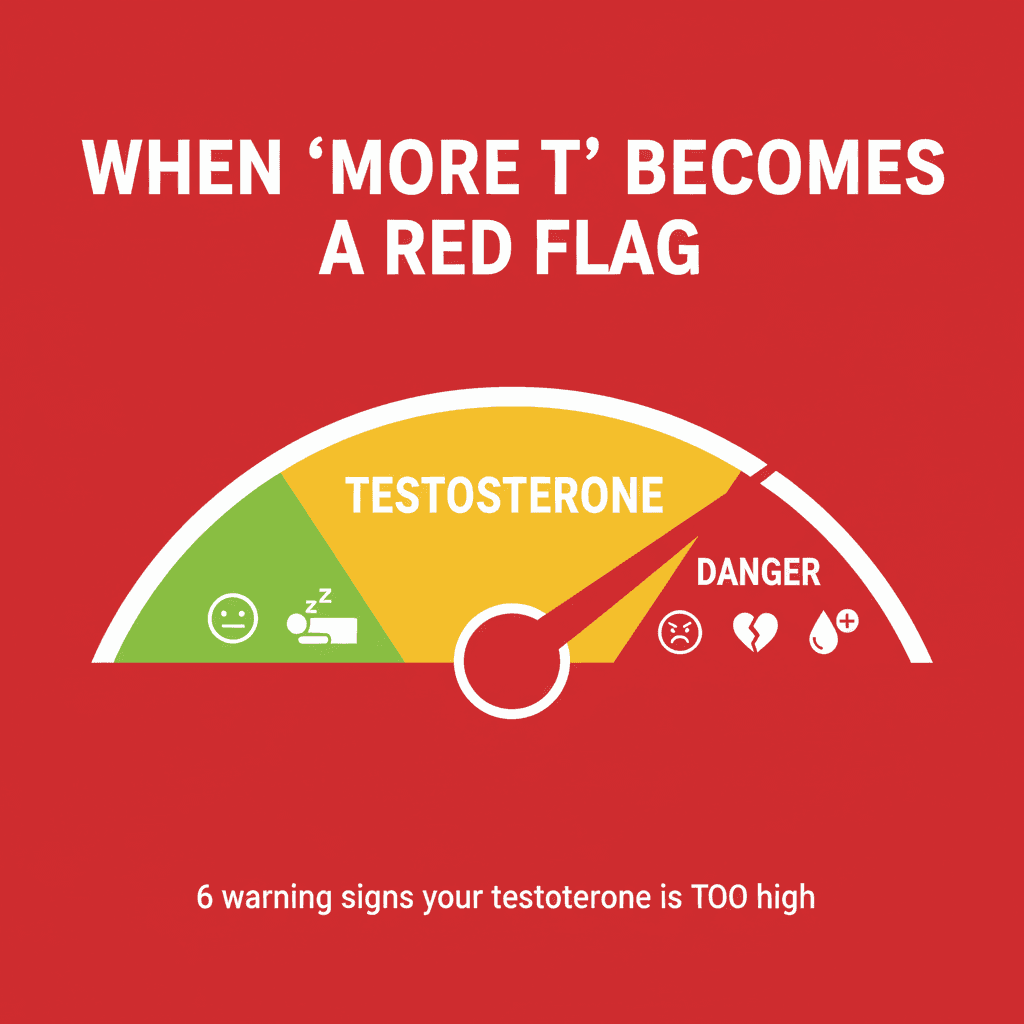
Quick Answer: What Are the Signs Your Testosterone Is Too High?
Possible warning signs of testosterone that is too high include:
- Increased aggression, irritability, or emotional reactivity
- Poor sleep, waking during the night, or worsening sleep apnea symptoms
- Sudden acne, oily skin, or accelerated hair loss
- Disruptive libido, erectile changes, or testicular shrinkage
- Elevated hematocrit, high blood pressure, or cardiovascular strain
- Anxiety, restlessness, or mood swings that feel out of character
If these symptoms started or worsened after beginning TRT, changing your dose, switching injection frequency, or adding other compounds, it is worth getting your labs reviewed.
1. When Confidence Crosses Into Aggression
Healthy testosterone levels can support drive, confidence, and motivation. But when levels climb too high, some men notice they become more reactive than usual.
Small frustrations may feel bigger than they should. You may snap faster, argue more, or feel like your patience is gone. This does not always show up as obvious rage. Sometimes it feels more like being constantly keyed up, defensive, or unable to let things roll off your back.
This matters because mood changes are not just personality issues. They can be real signs that your hormone protocol needs attention.
What to do:
If you are on TRT, do not guess your way through it. Talk with your prescribing clinician and review your total testosterone, free testosterone, estradiol, hematocrit, and dosing schedule. Peaks and valleys from certain protocols can sometimes make mood symptoms worse.
2. The Sleep Disruption You Cannot Explain
Testosterone and sleep are closely connected. Balanced testosterone can support better energy and recovery, but excessive levels may do the opposite.
Some men notice they fall asleep but wake up multiple times. Others feel hot, restless, wired, or unable to reach deep sleep. If you already snore or suspect sleep apnea, higher testosterone levels may make the problem more noticeable.
This is one of the most overlooked signs because men often blame work stress, caffeine, training harder, or getting older. But if your sleep changed after starting or adjusting TRT, hormones should be part of the conversation.
What to do:
Tell your provider if your sleep has worsened. You may need lab work, a protocol adjustment, or a sleep study. This is especially important if you wake up gasping, snore heavily, or feel exhausted even after a full night in bed.
3. Skin That Suddenly Feels Like It Did at Fifteen
Sudden acne is one of the more visible signs that testosterone or androgen activity may be too high.
Breakouts can appear on the face, chest, back, or shoulders. Skin may become oilier. Hair may feel greasier. Some men also notice faster body hair growth or accelerated scalp hair thinning, especially if they are genetically prone to male pattern hair loss.
This happens because testosterone can increase oil production in the skin. Testosterone can also convert to DHT, a more potent androgen involved in hair follicle activity.
What to do:
Do not treat this as only a cosmetic problem. A dermatologist may help with acne, but if the underlying driver is hormonal, the issue may keep coming back. Ask your provider to review your testosterone levels, estradiol, DHT if appropriate, and overall TRT protocol.
4. When Sex Drive Becomes Disruptive, or Starts Dropping
Many men assume that more testosterone always means more libido and better sexual performance. That is not always how the body works.
For some men, high testosterone can make libido feel intrusive or distracting. For others, sexual function may get worse. Erectile quality may change, libido may drop, or sensitivity may feel different.
There is also a fertility issue. External testosterone can suppress the brain’s signal to the testicles, which may reduce sperm production. Over time, some men notice testicular shrinkage. This is not something to ignore, especially if you want children now or in the future.
What to do:
Be direct with your clinician about libido, erections, testicular size, and fertility goals. This is not embarrassing information to a hormone provider. It is clinically useful information.
If fertility matters to you, say that before starting TRT or before changing your protocol.
5. The Cardiovascular Strain You May Not Feel Yet
One of the most important risks of poorly monitored testosterone therapy is elevated hematocrit.
Hematocrit is the percentage of your blood made up of red blood cells. Testosterone can increase red blood cell production. That can be beneficial in some cases, but if hematocrit gets too high, blood can become thicker, which may increase cardiovascular strain.
You may not feel this happening. Some men notice facial flushing, head pressure, high blood pressure, or reduced cardio performance. Others feel nothing at all until labs reveal the issue.
That is why monitoring matters. The Endocrine Society testosterone therapy guideline recommends monitoring men on testosterone therapy with a standardized plan that includes symptoms, adverse effects, testosterone levels, hematocrit, and prostate risk during the first year of treatment.
What to do:
If you are on TRT, your lab work should include more than testosterone. Hematocrit, hemoglobin, lipids, blood pressure, estradiol, liver markers, and other health indicators can help show how your body is responding.
If hematocrit is climbing, your clinician may consider changing your dose, adjusting injection frequency, reviewing sleep apnea risk, or recommending blood donation or therapeutic phlebotomy when appropriate.
6. Emotional Swings That Do Not Match Your Life
High testosterone does not always feel like confidence. Sometimes it feels like anxiety, restlessness, impatience, or emotional volatility.
You may feel great one day, then unusually flat, irritable, or tense the next. This can happen when testosterone levels are too high, when estradiol rises alongside testosterone, or when your protocol creates sharp hormonal peaks and dips.
The tricky part is that emotional symptoms are easy to blame on life. Work is stressful. Relationships are stressful. Sleep may be poor. But if your mood changed after starting TRT or adjusting your dose, it is worth connecting the dots.
What to do:
Track your symptoms alongside your injection schedule. Note when you feel best, when you feel worst, and when symptoms appear. That information can help your provider determine whether the issue is dose, frequency, estrogen conversion, sleep, lifestyle, or something else.
What Should You Do If You Think Your Testosterone Is Too High?
First, do not panic. Second, do not adjust your TRT dose on your own without speaking to your provider.
Symptoms matter, but labs confirm the bigger picture. A proper review may include:
- Total testosterone: Shows the total amount of testosterone in your blood.
- Free testosterone: Shows how much testosterone is available for use.
- Estradiol: Helps explain mood, libido, water retention, and nipple sensitivity.
- Hematocrit and hemoglobin: Helps monitor red blood cell concentration.
- Lipids: Helps assess cardiovascular health.
- Blood pressure: Helps identify cardiovascular strain.
- PSA, when appropriate: Helps monitor prostate health based on age and risk.
The American Urological Association testosterone deficiency guideline emphasizes baseline hemoglobin and hematocrit testing before testosterone therapy, along with appropriate follow-up monitoring.
Why “More Testosterone” Is Not Always Better
The goal of TRT is not to push your testosterone as high as possible. The goal is to relieve symptoms, restore healthy function, and keep your body in a safe, sustainable range.
For some men, a higher dose may feel great briefly, then create side effects. For others, the number may look impressive on paper, but mood, sleep, libido, blood pressure, or labs tell a different story.
Good TRT is not about chasing the highest lab value. It is about finding the dose and protocol where you feel better and your health markers stay in range.
When to Talk to a TRT Provider
You should speak with a knowledgeable provider if you notice:
- New aggression, anxiety, or mood swings
- Sleep problems after starting or adjusting TRT
- Sudden acne or oily skin
- Nipple sensitivity, water retention, or emotional swings
- Rising blood pressure
- High hematocrit or abnormal lab work
- Testicular shrinkage or fertility concerns
- Libido changes that feel unusual for you
A provider can help determine whether your symptoms are actually from high testosterone, elevated estradiol, poor sleep, dosing frequency, lifestyle factors, or another medical issue.
Bottom Line
Testosterone is powerful, but more is not always better.
If your dose is too high, your body may tell you through mood changes, sleep disruption, acne, libido shifts, fertility changes, or silent cardiovascular markers like elevated hematocrit.
The solution is not guesswork. The solution is proper testing, careful monitoring, and a TRT protocol built around your symptoms, your labs, and your long term health.
If you are worried your testosterone may be too high, or you are not sure whether your current TRT protocol is right for you, connect with a licensed provider through AlphaMD and get a clear review of what your body is actually telling you.
Have a question? Ask us.
At AlphaMD, we're here to help. Feel free to ask us any question you would like about TRT, medical weightloss, ED, or other topics related to men's health. Or take a moment to browse through our past questions.
People are asking...
With T fluctuations being so drastic from any given hour, day, week, how can you really know if someone has a hormonal imbalance?...
That is why symptoms are king, and numbers should be used as a guide post for what treatment is appropriate and how responsive someone is. Your 500 and my 500 will feel completely different to each of... See Full Answer
What do you consider too high for E2 if you aren’t exhibiting any other symptom like bloating? I’m mainly concerned that I don’t have symptoms but may...
Providers generally become concerned when E2 starts to be near 40+ & typically want to do something about it at 50+. Most times this does come with symptoms, and some men get them even earlier, though... See Full Answer
I’m taking 500iu 2x week, so far I’ve not really felt anything but I’ve probably read too much about it and have some anxiety about side effects or th...
The symptoms of high estrogen can include: Sensitive nipples Edema (bloating or retaining extra fluid) Being overly emotional (crying at times you normally wouldn’t, being aggressive or angry) Acne Lo... See Full Answer
Get $30 off your first month’s order
Enter your email address now to receive $30 off your first month’s cost, other discounts, and additional information about TRT.
Legal Disclaimer
This website is a repository of publicly available information and is not intended to form a physician-patient relationship with any individual. The content of this website is for informational purposes only. The information presented on this website is not intended to take the place of your personal physician's advice and is not intended to diagnose, treat, cure, or prevent any disease. Discuss this information with your own physician or healthcare provider to determine what is right for you. All information is intended for your general knowledge only and is not a substitute for medical advice or treatment for specific medical conditions. The information contained herein is presented in summary form only and intended to provide broad consumer understanding and knowledge. The information should not be considered complete and should not be used in place of a visit, phone or telemedicine call, consultation or advice of your physician or other healthcare provider. Only a qualified physician in your state can determine if you qualify for and should undertake treatment.